
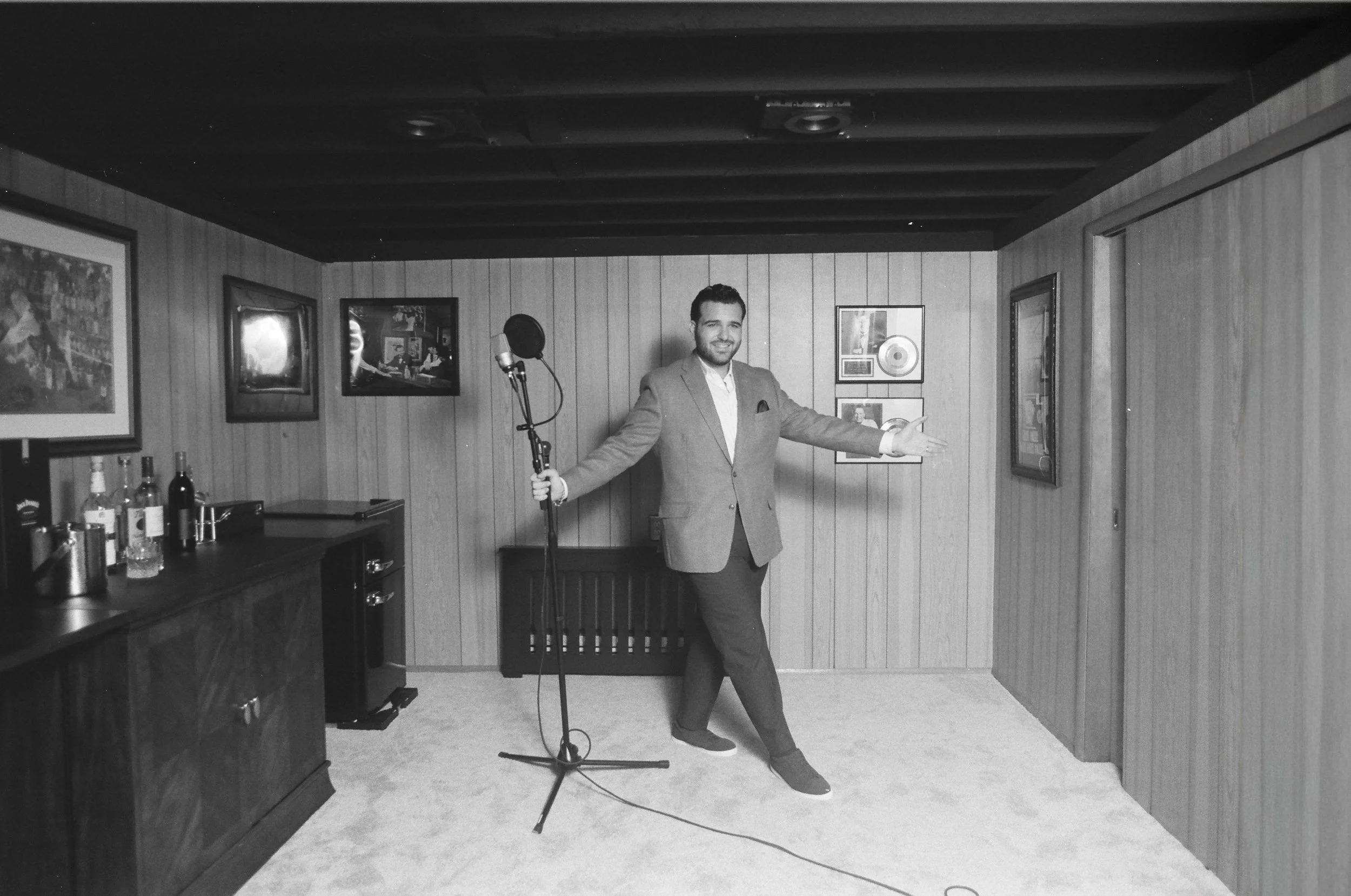
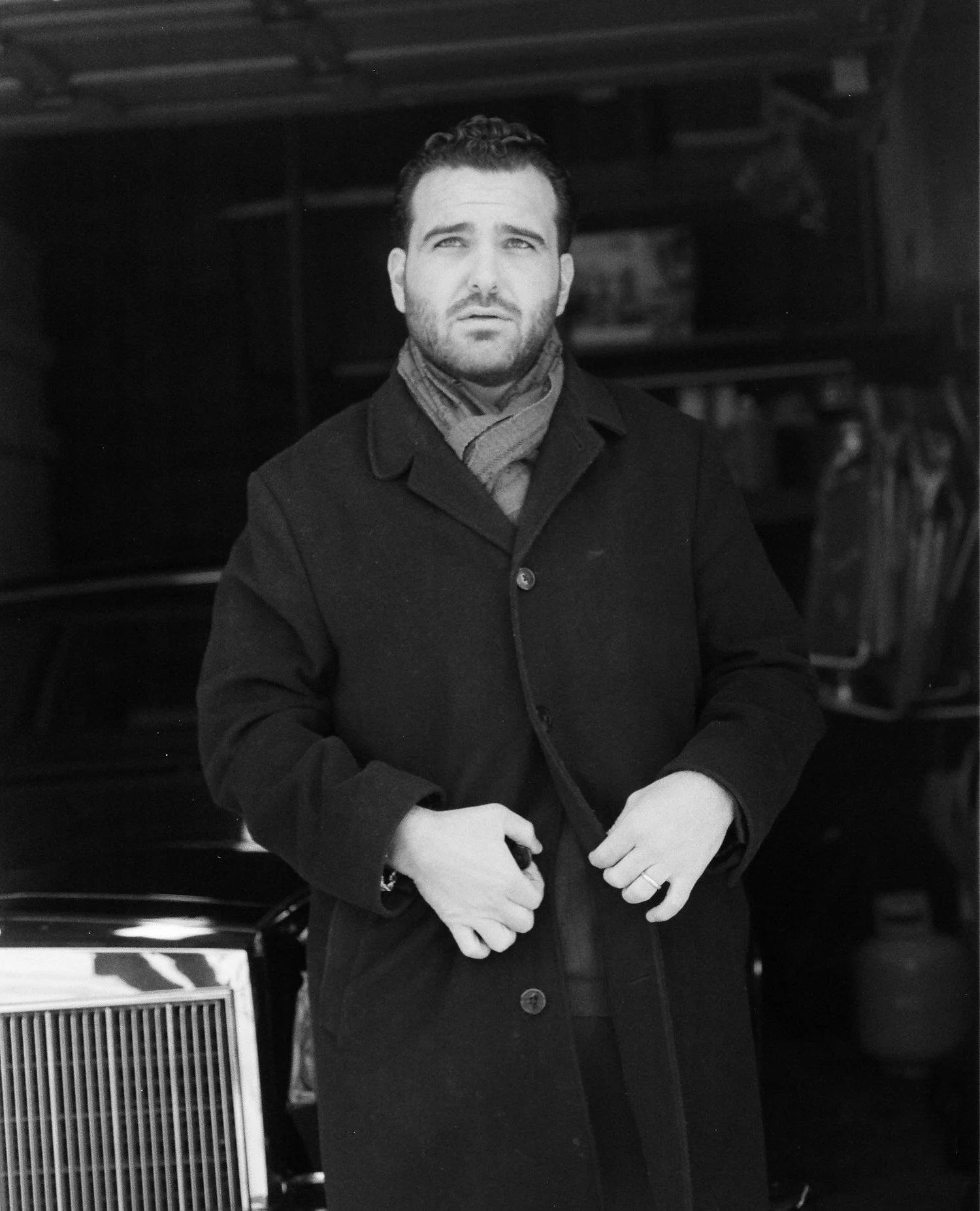
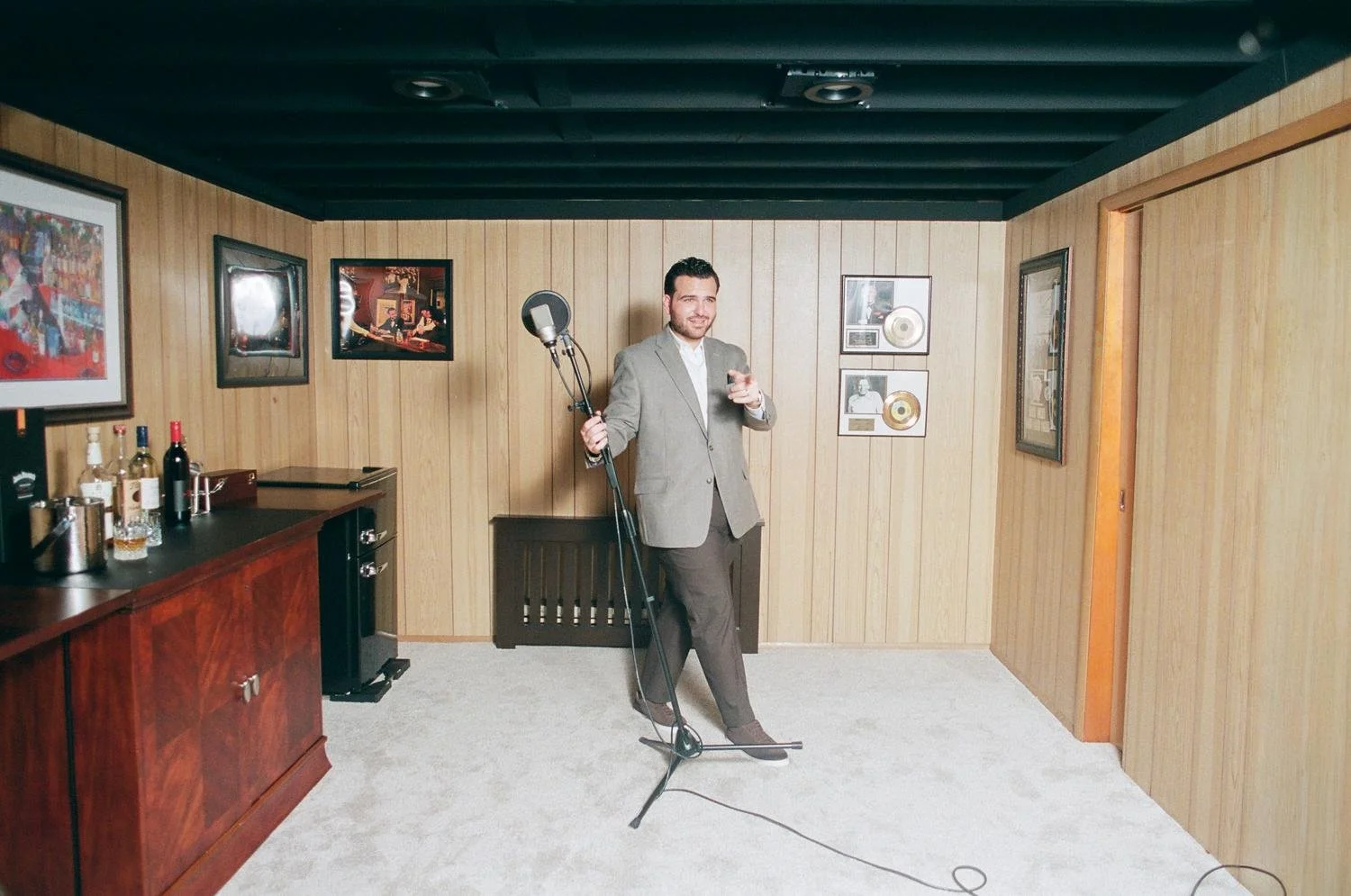
There are artists who borrow an era, and there are artists who live inside it.
For Sal “The Voice” Valentinetti, the old school isn’t costume – it’s family, it’s language, it’s the way he moves through the world. “There’s a whole group of people in this country that never moved on from a certain way of life,” he says. “In a way, we’re the new old school, but we also never left – we never changed.”
That spirit runs through everything he does, onstage and off. Valentinetti is the kind of person who strikes up conversations with anyone willing to listen – the instinctive ringleader in a room, the one who brings people together and keeps the energy moving. Connection, for him, isn’t a marketing word or a performance trick; it’s the entire point. “I care about human connection, I want human connection,” he says. “Maybe it’s my energy.” The same instinct shapes the shows that have taken him across the country for the better part of a decade – nights built not just around songs, but around rapport, storytelling, and the kind of easy back-and-forth that makes the room feel less like a concert hall and more like an evening among friends.
That connection reached a national audience in 2016, when Valentinetti stepped onto the stage of America’s Got Talent. For a young singer who had spent years embracing music that wasn’t exactly typical for someone his age, the moment was more than a television appearance – it was affirmation. “America’s Got Talent was a pivotal point for my career,” he says. “From then on I’ve worked steadily for 10 years – I never had another job.” The exposure introduced millions to the booming, velvet-lined croon that earned him the nickname “The Voice,” but just as importantly, it confirmed something Valentinetti had already believed about himself: That the music he loved – the great American standards, the swaggering swing of big-band showmanship – still had a place on modern stages.
Over the past ten years, Valentinetti has built the kind of career that only happens on the road – city by city, room by room, night after night. The television moment may have introduced him to the world, but the years since have been defined by the craft of live performance: Traveling constantly, stepping into new cities, assembling bands on the fly, and shaping each show into something that feels personal to the room. It’s a role he takes seriously. Valentinetti arrives prepared – charts in hand, arrangements mapped out, musicians ready to lock in. “This bag, this is all charts – nine instruments right here,” he explains. “I’ll show up to a city like L.A., Toronto, Long Island, Pittman, New Jersey… I’ll play with 36 different people. I get there, we rehearse, I teach them the hard parts of the show, and then we roll.” In the process, he’s developed a reputation not just as a singer, but as a bandleader – someone who can walk into a room of strangers and turn them into a cohesive ensemble before the first downbeat.
Long before the stages and the touring, though, the music itself started somewhere much smaller – in a kitchen, with his grandmother Sentina. Valentinetti was her baby’s baby, arriving years after the rest of the family’s grandchildren, and the bond between them ran deep. They would sit together listening to Frank Sinatra, Jerry Vale, Mel Tormé, Rosemary Clooney, and Ella Fitzgerald – the voices that filled the sweetest moments of his childhood. “That music was connected with the happiest times I had with her,” he says. “The sound of a kick followed by a shout – horns – I still get excited when we hit a shout in a chart. The whole time I’m doing that, I’m thinking of my grandmother dancing in her kitchen.” Those early afternoons didn’t just shape his taste; they gave him the emotional language that still drives his performances today.
That sense of lineage also shapes the way Valentinetti approaches the stage. His performances are not meant to feel like distant recitals of familiar standards; they’re meant to feel alive in the room. The songs may come from the Great American Songbook, but the show unfolds like a conversation – back-and-forths with audience members, quick detours, and the occasional good-natured ribbing of the crowd or the band. In spirit, it follows the tradition of the entertainers who shaped him. “I like to really cut loose and have a good time onstage,” he says. “I tell jokes, I tell stories, I weave it into the show… it’s more like an ‘evening with’ than a concert.” The music provides the backbone, but the real electricity comes from the rapport – the instant when the room loosens up, someone shouts something from the audience, and the night takes a turn that no setlist could have planned.
At the center of it all is an identity Valentinetti wears comfortably: Proudly old school, deeply rooted in family, and unmistakably shaped by the Italian-American communities that raised him. For him, that culture is core to the way he was brought up. Sundays, family gatherings, the rhythms of neighborhoods where everyone knows each other’s names. It’s part of why he continues to live on Long Island. “What’s made me who I am is my family,” he says. “I’m 15 minutes from everyone I love.”
For Valentinetti, the music itself is the occasion. The songs he gravitates toward – whether drawn from the American Songbook or interpreted through his own lens – are stories meant to be lived in the room with the audience. “The hits of a lifetime,” as he calls them. Timeless standards, reinterpreted by someone who grew up hearing them as part of everyday life. Every song carries something with it: A tale of love or heartbreak, humor or longing, joy or reflection. “Every song is an occasion,” he says. “Every song is a great story.” What matters most is the way those stories connect – how a familiar melody can open a door to shared memory between performer and crowd.
That philosophy comes to life in Valentinetti’s latest single “Little Pal,” a piece that reflects both his musical lineage and his personal sense of storytelling. The track traces back to a version recorded by Hoboken-born singer Jimmy Roselli, whose voice was a familiar presence in Valentinetti’s childhood home through his Neapolitan roots. At its heart, the song is a father’s tender farewell to his young son – an aching moment of separation long known for bringing even the toughest listeners to tears. Drawn to the song’s emotional core, Valentinetti embraced it as a piece of living tradition – a narrative that resonates across generations. Like many of the songs he gravitates toward, “Little Pal” holds a deeply human narrative at its center – one that can move an entire room with a single lyric. For Valentinetti, recording it was less about revisiting the past than continuing the conversation between generations of singers who keep these stories alive.
That approach places Valentinetti firmly within a lineage he reveres. The artists who shaped his ear – Frank Sinatra, Bobby Darin, Ella Fitzgerald, Louis Armstrong, Louis Prima – were not simply singers, but entertainers and bandleaders who knew how to command a room. Some were masters of elegance, others of spontaneity; all understood that the stage was as much about personality as it was about pitch. Valentinetti sees himself as part of that tradition: Someone who honors the craft while allowing his own voice and character to guide the performance. It’s why his shows feel loose, conversational, and inviting – an atmosphere where the music is serious, but the experience is never stiff.
Along the way, there have been moments that confirmed he was on the right path. Simon Cowell, seeing him again years after his America’s Got Talent debut, told him in front of the entire audience that he was “starstruck” – praise that Valentinetti still counts among the most meaningful acknowledgments of his career. There was also the time he met Dina Martin, daughter of Dean Martin, who told him her father would have loved his style. And when singer-songwriter Bobby Caldwell sent him a letter praising his work and sharing songs he hoped Valentinetti might record, it felt like another signal that the music he’d devoted himself to was still resonating far beyond the stage.
Even after a decade of steady touring, Valentinetti’s ambitions remain refreshingly simple: Keep traveling, keep performing, keep bringing the music to as many rooms as possible. Whether it’s a theater packed with longtime fans or a small jazz club somewhere new, he’s happiest doing what he’s done for the past ten years – stepping onto a stage, greeting the band, and letting the night unfold. The goal, he says, is to play everywhere: Chicago, Detroit, New Jersey, Florida, Texas, Northern California, Hawaii – and eventually clubs across Italy, from top to bottom.
Because for Sal Valentinetti, the mission has never really changed. He’s still the same singer shaped by family, by old records spinning in a kitchen, by the simple thrill of a big band hitting a shout chorus at just the right moment. The difference now is that the world has caught on. In an era constantly chasing the next new thing, Sal “The Voice” Valentinetti is proof that sometimes the most powerful idea is simply keeping something alive – carrying the old school forward for a new generation, one show at a time.